










If your e-bike meets Ontario's legal definition of a "power-assisted bicycle," the short answer is no on all three: no driver's license, no registration or plate, and no legally mandatory insurance. You do need to be at least 16 years old, and you do need to wear an approved helmet every single ride, with no age exemption the way there is for regular bicycles.
Ontario's rules live in Ontario Regulation 369/09 under the Highway Traffic Act, and they hinge entirely on how your bike is built and powered, not on its price tag or where you bought it. Step outside that definition (a motor over 500 watts, a top assisted speed past 32 km/h, or no working pedals) and your "e-bike" is legally a motor vehicle. That single distinction changes every answer below, so it is worth understanding before you buy or ride.
In this article
- What makes an e-bike a "power-assisted bicycle" in Ontario
- Do you need a driver's license?
- Do you need to register or plate it?
- Is insurance required, and should you get it anyway?
- Do you need a helmet?
- What happens if your e-bike doesn't meet the definition
- Can you modify your e-bike to go faster?
- Is the law about to change in 2026?
- FAQ

What Makes an E-Bike a "Power-Assisted Bicycle" in Ontario?
Ontario does not regulate e-bikes by brand, price, or how they look. It regulates them by a specific technical definition under Ontario Regulation 369/09. Meet every part of it and your bike is legally treated like a bicycle. Miss even one part and it is treated like a motor vehicle.
| Requirement | Ontario's Limit |
|---|---|
| Motor power | 500 watts maximum, continuous |
| Top assisted speed | Motor assistance must cut off at 32 km/h |
| Maximum weight | 120 kg, including the battery |
| Pedals | Must have working, operable pedals on a bicycle frame |
| Minimum age to ride | 16 years old |
| Helmet | Mandatory for every rider, regardless of age |
There is no buffer built into these numbers. A motor rated over 500 watts of continuous power is illegal to operate as a power-assisted bicycle in Ontario, full stop. Any bike that can provide assistance past 32 km/h is equally illegal, whether it left the factory that way or ended up that way later. Close does not count. Cross either line and the bike is legally a motor vehicle, not a bicycle.
Every e-bike we sell is built to fit inside these limits, so you are not the one who has to guess. That said, it is worth knowing exactly what the rule covers, since it is the answer to almost every question below.
Do You Need a Driver's License to Ride an E-Bike in Ontario?
No. If your e-bike meets the power-assisted bicycle definition above, you do not need a G1, G2, full G license, or any other driver's license to ride it. There is no road test. The only age requirement is that you must be 16 or older.
This is one of the biggest practical differences between an e-bike and a moped or a low-speed motorcycle in Ontario. Those vehicles fall under separate licensing classes. A compliant e-bike does not.
Do You Need to Register or Plate an E-Bike in Ontario?
No. A compliant e-bike does not need to be registered with the province, does not need a license plate, and does not need a VIN. You buy it, you ride it, following the same rules of the road as a regular cyclist.

Is E-Bike Insurance Required in Ontario, and Should You Get It Anyway?
Insurance is not legally required for a compliant e-bike in Ontario. That said, we would still recommend looking into it, for two practical reasons rather than a legal one.
First, e-bike theft is a real and growing problem in Ontario's cities, and a quality e-bike is a meaningful investment to replace out of pocket. Second, liability matters too. If you cause an accident that injures someone or damages property while riding, you could be on the hook personally, the same way a cyclist would be.
Many home and tenant insurance policies include some coverage for bicycles, but the built-in limit is often modest and may not fully cover a higher-end e-bike. It is worth calling your insurer and asking specifically about a bicycle or e-bike rider, or a standalone policy. Several Canadian insurers, including Intact, now offer bicycle-specific coverage options worth comparing against what your existing policy already includes.
Do You Need a Helmet to Ride an E-Bike in Ontario?
Yes, and this is where e-bikes differ from regular bicycles. For a standard pedal bike in Ontario, only riders under 18 are legally required to wear a helmet. For an e-bike, an approved bicycle or motorcycle helmet is mandatory for every rider, at any age, every ride.

A well-ventilated, MIPS-equipped helmet built for everyday city riding, in sizes from small through large.
What Happens If Your E-Bike Doesn't Meet the Definition?
This is where things get expensive and complicated, and it is worth understanding before you buy, especially if you are shopping online from a marketplace that does not verify Canadian compliance.
If an e-bike has a motor rated over 500 watts, can assist past 32 km/h, weighs more than 120 kg with the battery installed, or has no working pedals (a throttle-only "e-bike" with decorative pedals, for example), it no longer qualifies as a power-assisted bicycle under Ontario law. Legally, it becomes a moped or a limited-speed motorcycle. That reclassification brings back everything a compliant e-bike is exempt from: you now need a driver's license, plate and registration, and insurance, the same as you would for any other motor vehicle.
This is a common trap with 750-watt e-bikes, which are widely sold online and marketed as street-legal. As we cover in detail in our guide to e-bike wattage laws across Canada, no province currently allows a 750-watt e-bike on public roads as a legal power-assisted bicycle. If you are cross-shopping models, checking the motor's rated wattage against Ontario's 500-watt limit is one of the first things to verify, not an afterthought.
Can You Modify an E-Bike to Go Faster or More Powerful in Ontario?
No. Removing or bypassing a speed limiter, installing a higher-power motor or controller, or reflashing a motor's software to raise its wattage or top assisted speed all have the same legal effect: they take a compliant e-bike and turn it into an unlicensed motor vehicle. It does not matter that the bike was legal when you bought it. Ontario's rules apply to how the bike performs right now, not to how it left the factory.
Beyond the legal risk, a modified motor can also void your manufacturer's warranty, and it will no longer meet the safety certification the bike was originally built and tested to. If you genuinely want more power or a higher top speed, the only legal path in Ontario is a vehicle actually licensed, plated, and insured as a moped or motorcycle, not a modified e-bike riding under a false identity.
Is Ontario's E-Bike Law About to Change in 2026?
Possibly, but nothing has changed yet for current riders. On April 23, 2026, Ontario's Ministry of Transportation posted a proposal called "Modernizing Ontario's Framework for Power-Assisted Bicycles," the first major rewrite of the rules since 2009. It would introduce two categories:
- Class 1: Pedal-assist only, with a 6 km/h walk-assist function permitted, maximum weight 55 kg.
- Class 2: Pedal-assist or full electric power with a throttle, maximum weight 120 kg.
Both proposed classes would keep the existing 500-watt motor limit and 32 km/h speed cap, and both would still require functional pedals and a bicycle frame. The public comment period closed on June 7, 2026, and the ministry has proposed a 12-month education period before any enforcement would begin. As of publishing, the proposal has not been adopted into law, so if you own or are buying a compliant e-bike today, none of this changes your day-to-day rights or requirements. We will update this article if and when that changes.

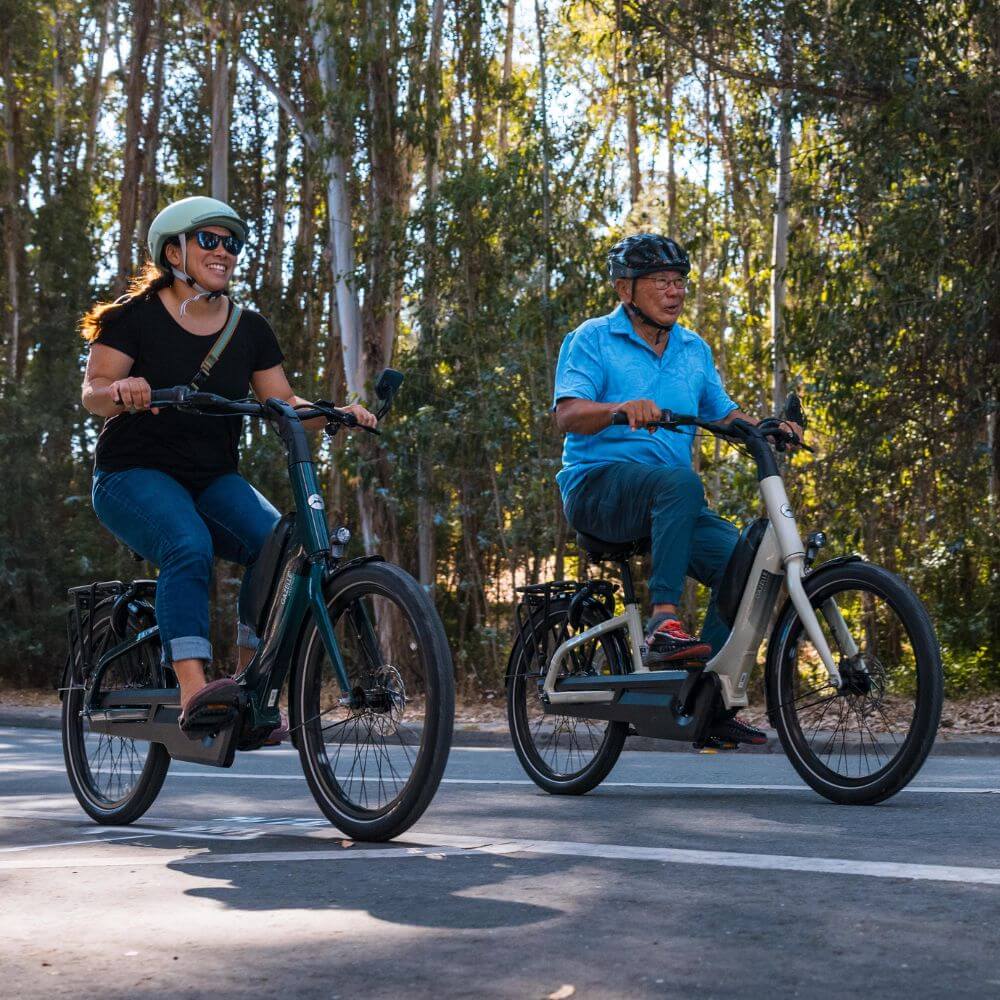
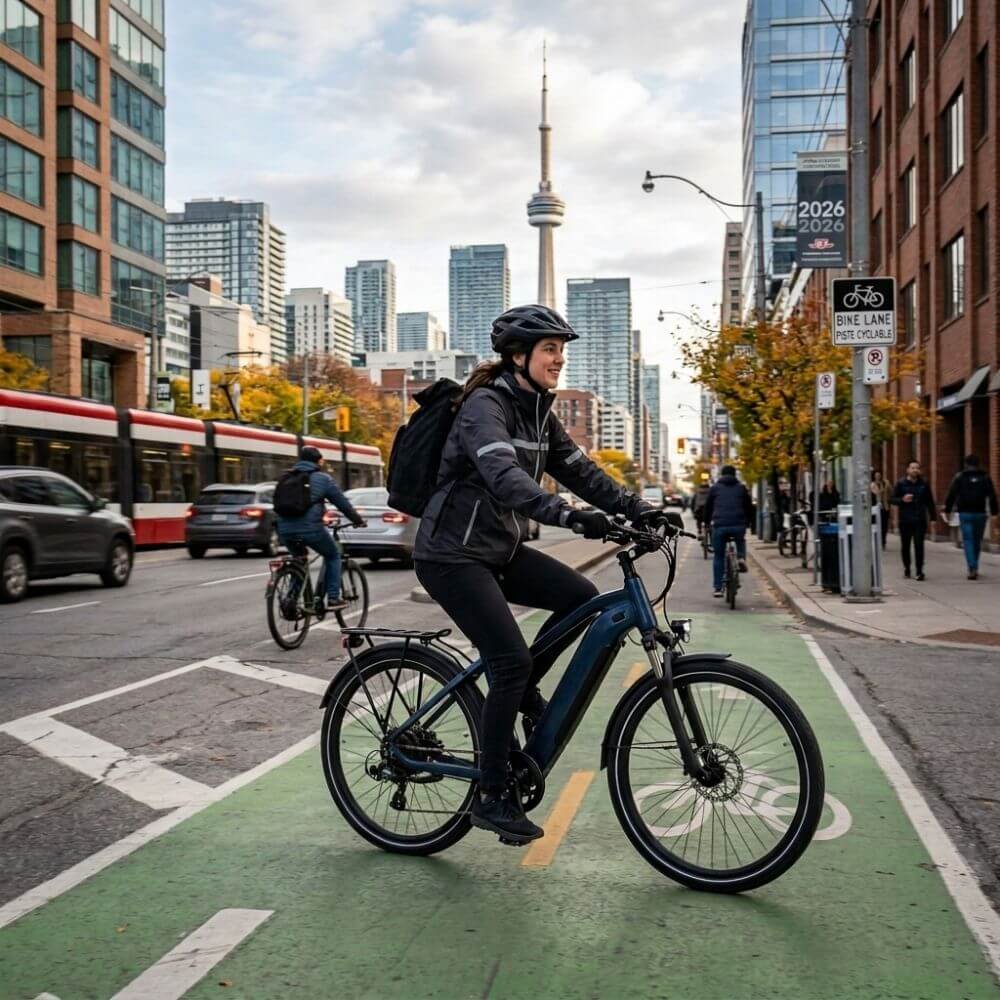
A step-thru city e-bike with a Bosch mid-drive motor, built for daily commuting and errands around Ottawa and Gatineau.
Not sure which bike fits your commute, budget, or how you actually plan to use it? Our How to Choose an E-Bike in 2026 walks through motor type, range, and fit before you narrow it down to a specific model.
Frequently Asked Questions
Can I ride an e-bike on the sidewalk in Ontario?
No. Power-assisted bicycles are generally prohibited from sidewalks province-wide, the same as regular bicycles. Some municipalities have narrower local bylaws, so check with your city if you are unsure about a specific street or trail.
How old do you have to be to ride an e-bike in Ontario?
You must be at least 16 years old to operate a power-assisted bicycle in Ontario. There is no upper age limit.
Are 750-watt e-bikes legal in Ontario?
No. Ontario's power-assisted bicycle definition caps motor output at 500 watts. A 750-watt e-bike exceeds that limit, which means it does not qualify as a power-assisted bicycle and is instead treated as a motor vehicle, requiring a driver's license, registration, and insurance to operate legally on public roads.
Do I need insurance to ride an e-bike in Ontario?
Not by law. It is worth having anyway, given how often bikes are stolen in Ontario's cities and the personal liability you carry if you injure someone or damage property while riding. Check whether your home or tenant policy already covers it, and consider a dedicated bicycle or e-bike rider if it does not.
Can I modify my e-bike to make it faster or more powerful in Ontario?
No. Any modification that lets your motor exceed 500 watts of continuous power, or lets the assist push you past 32 km/h, makes the bike illegal to operate as a power-assisted bicycle, even if it met the definition when you bought it. At that point it is legally a motor vehicle and needs a license, registration, and insurance to be on the road.
Where am I allowed to ride an e-bike in Ontario?
Anywhere a regular bicycle is allowed, including most roads, highways where cyclists are permitted, and designated bike lanes. E-bikes are not allowed on 400-series highways, major expressways, or sidewalks, and some provincial parks and conservation areas restrict them as well.
Is Ontario's e-bike law changing in 2026?
A change has been proposed, not finalized. Ontario's Ministry of Transportation is reviewing a new Class 1 and Class 2 system for power-assisted bicycles, with a 12-month education period proposed before enforcement would begin. As of publishing, current riders and buyers are unaffected, and the existing 500-watt, 32 km/h rules remain in effect.
Ride an E-Bike That's Already Built to Ontario's Rules
Every bike we sell is chosen and set up to meet Ontario's power-assisted bicycle definition, so you can skip the guesswork and just ride.
Shop Ontario-Legal E-Bikes →Financing available. Visit us in Ottawa or Gatineau, or shop online.

About the Author
William Leishman
Founder & President, Scooteretti
William Leishman is the Founder and President of Scooteretti, one of Canada's leading electric bicycle retailers and a recognized authority in the eBike industry since 2010. As a member of the National Bicycle Dealers Association (NBDA) Advisory Board for eBike Safety, William plays a central role in shaping best practices and safety standards across North America, and is regularly featured on television, radio, print, and digital media as a trusted voice for consumers and industry professionals alike.
William's core mission is to educate Canadian consumers on choosing the right electric bicycle, one that truly fits their lifestyle, budget, and safety needs. As Canada's eBike market has exploded with new options, too many riders are purchasing the wrong bike, spending thousands across multiple purchases before finding a good fit. Scooteretti's "buy it once, buy it right" philosophy was built to solve exactly this problem, and it has helped thousands of satisfied customers make confident, informed decisions since 2010.
Beyond finding the perfect ride, William is on a personal mission to make eBike safety a national priority. He is a passionate advocate for making UL certification mandatory for every electric bicycle sold in Canada, a standard he believes every Canadian deserves, yet one that current legislation does not require. William is actively working to raise awareness among consumers and at all levels of government, because he firmly believes that no Canadian should have to risk their safety on an uncertified eBike. This isn't just a business position, it's a personal commitment he is dedicated to seeing become law.