








The fastest way to choose the right e-bike is to work through five things, in order: how you will actually use it, the motor type that matches that use, the battery size for your typical ride, whether it is legal to ride where you live in Canada, and how it fits your body on a real test ride. Skip straight to whichever bike looks best in photos and you will likely end up with too little range for your commute, a motor that is the wrong fit for your hills, or a frame that is the wrong size. This guide walks through each step, with a comparison table near the end so you can match your answers to an actual bike, and a checklist of the mistakes that trip up most first-time buyers.
In this article
- Step 1: Figure out how you will actually use it
- Step 2: Mid-drive or hub motor
- Step 3: How much battery range you need
- Step 4: Is it legal to ride in Canada
- Step 5: Getting the right fit
- Which e-bike fits your use case
- Step 6: Budget and warranty
- FAQ
Step 1: How will you actually use this e-bike?
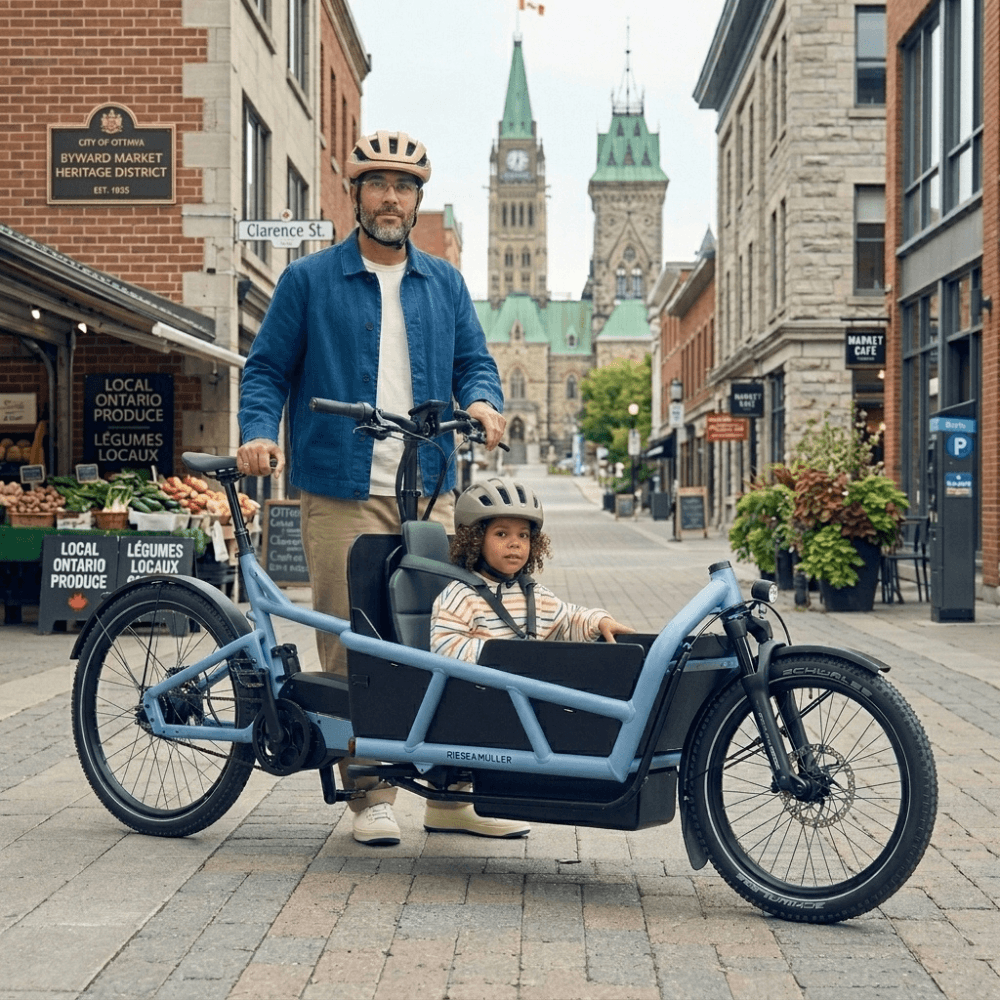
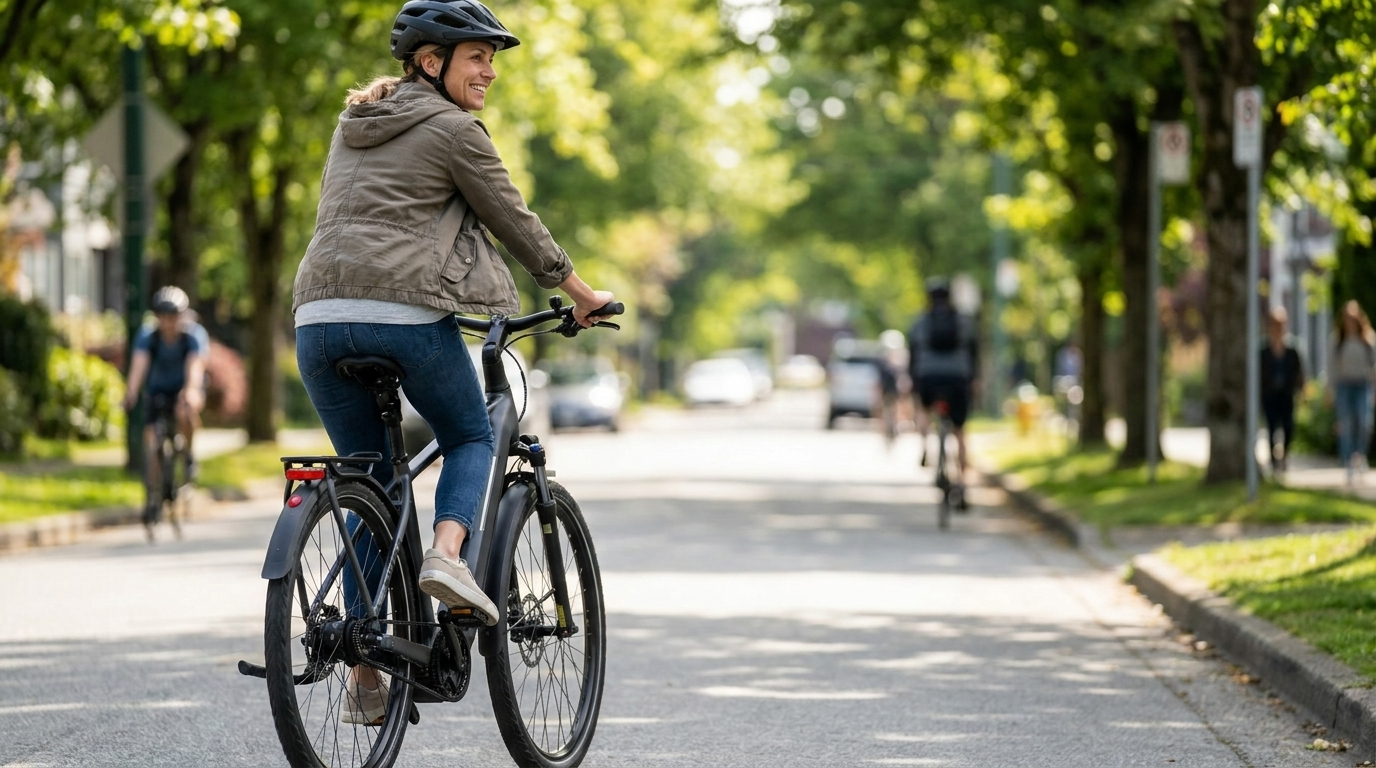
Before you compare a single spec sheet, answer three questions: where will you ride most (paved streets, gravel trails, both), how far is your typical trip, and do you need to carry anything (groceries, kids, gear) or store it somewhere tight like a condo hallway. Your answers point you toward a category before you ever look at a motor or battery number.
Commuter and hybrid e-bikes are built for smooth roads and daily mileage. Cargo and longtail e-bikes trade some agility for the ability to haul real weight. Electric mountain and fat bikes are built around rougher terrain, with sturdier frames and wider tires. Picking the category first narrows a catalog of hundreds down to a handful worth comparing.
Step 2: Mid-drive or hub motor?
This is the single biggest factor in how a bike feels to ride. A mid-drive motor sits at the pedals and works through the bike's gears, which gives it more usable torque for hills and loaded riding, centers the weight low and close to the frame for better handling, and generally delivers better range per charge. A hub motor sits in the front or rear wheel, costs less, is simpler to maintain, and holds a steady speed well on flat ground, but it adds weight off-center and works harder (and gets warmer) on long climbs.
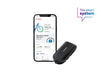
If you are commuting on mostly flat terrain and want the lowest-maintenance option, a hub motor is a reasonable choice. If you are dealing with hills, carrying cargo, or want the most range out of a single charge, a mid-drive system, like the Bosch motors used across most of our e-bike lineup, is the better long-term pick.
Durability tells a similar story. A mid-drive motor is generally significantly more reliable and durable than a hub motor over its full life cycle, often outlasting one by three to five times. It is not uncommon for a quality mid-drive to exceed 30,000 km of riding, while hub motors typically run somewhere between 5,000 and 10,000 km before performance drops off, depending on build quality. If you are after the most natural, human-like riding feel, where the assist works with your own pedaling rather than just spinning a wheel, a mid-drive motor is usually the better choice on that front too.

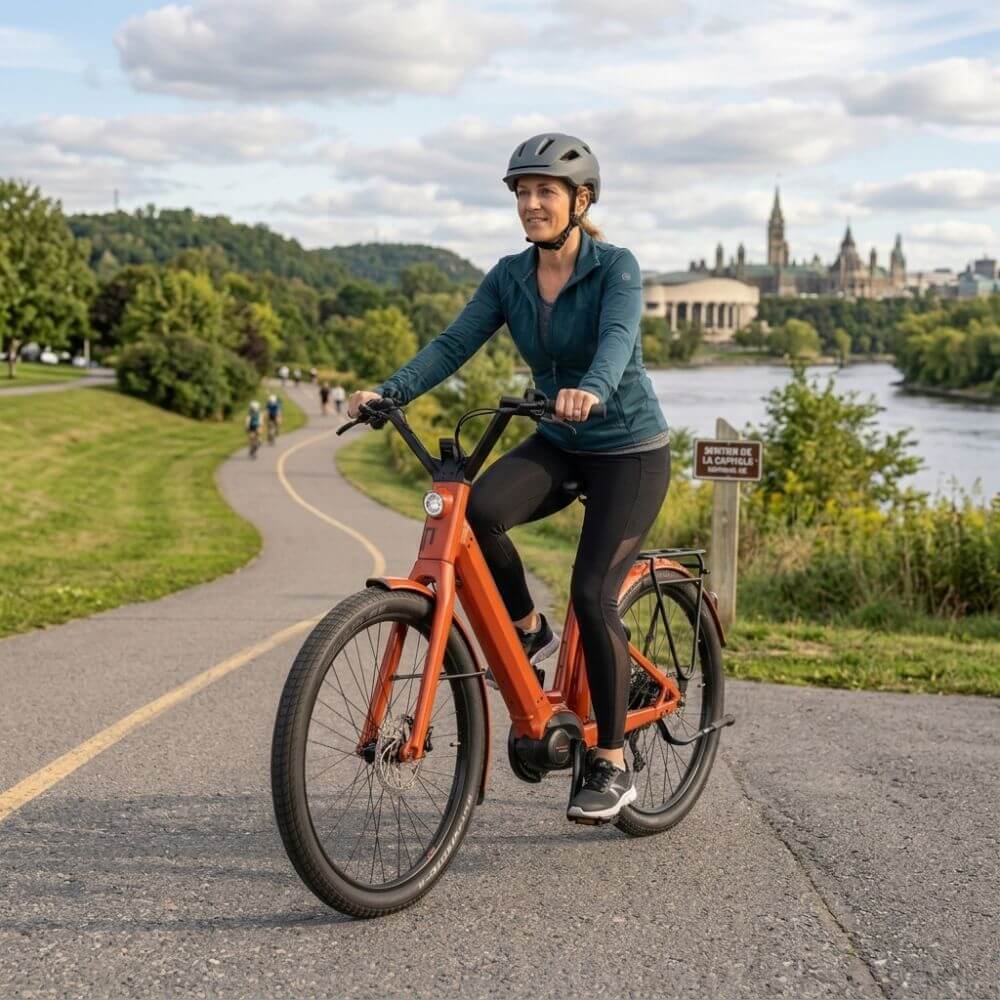
Step-thru frame, Bosch Performance CX mid-drive motor, and a 600 Wh+ battery built for daily riding without babysitting the range.
Step 3: How much battery range do you actually need?
Most e-bikes cover 30 to 70+ km on a charge, depending on battery size, terrain, rider weight, and how much you lean on the highest assist level. Hills, headwinds, and cold temperatures can cut that range noticeably. A simple rule that holds up well: take your longest typical ride and look for a bike with at least 30 to 40 percent more range than that, so a bad-weather day or an extra errand does not leave you pedaling a heavy bike with a dead motor.
For a 10 to 20 km daily commute, a 400 to 500 Wh battery is usually plenty. If you are riding longer distances, climbing often, or hauling cargo, look at bikes in the 600 Wh+ range instead.
Battery quality changes that math too. A well-built system, like the Bosch batteries used across most of our lineup, can comfortably reach 100 to 180 km between charges in good conditions, well beyond what a basic battery delivers. When you compare batteries, check that it is UL certified. That certification means the battery has passed independent safety testing, and a UL-certified battery also tends to hold its capacity longer over repeated charge cycles.
Step 4: Is the e-bike legal to ride where you live in Canada?
Across most of Canada, a legal power-assisted bicycle has a motor rated at 500W or less, stops giving assist once you hit 32 km/h, and still has working pedals you can use without the motor running. That covers nearly every commuter, hybrid, and city e-bike from major brands, including everything in our lineup. One rule does not vary by province: helmets are mandatory for every e-bike rider in Canada, regardless of age, even in provinces where helmet laws for regular bicycles are looser. Other rules do differ by province from there, including separate licence requirements for throttle-equipped bikes and minimum rider ages.
Check your province's specific rules before you buy, especially if you are looking at a cargo bike or anything with a throttle. Transport Canada's low-speed vehicle information sheet is a useful starting point, and your provincial transportation ministry's site will have the specifics that actually apply to you.
Step 5: Get the fit right before you buy
A spec sheet cannot tell you how a bike feels. Two riders on paper-identical bikes can have completely different experiences depending on standover height, reach to the handlebars, and how the motor delivers power. Aim for 1 to 2 inches of standover clearance on a commuter or hybrid frame (more on a mountain or fat bike), and your arms should have a slight, comfortable bend when you are gripping the bars, not a full stretch.
Test ride before you buy if you possibly can. It is the single most common regret we hear from first-time buyers who bought online sight unseen: the bike looked right in photos, but the fit or the way the power kicked in did not match what they expected.
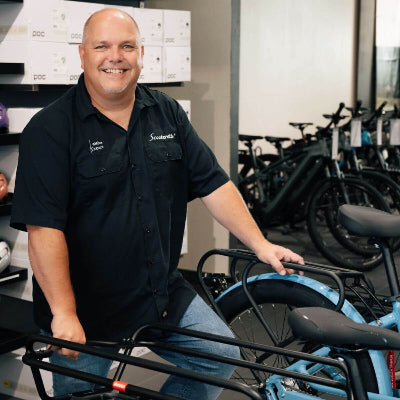
Can't get into a Scooteretti store, or don't live nearby? Book a free fit consultation with our team. We will go through your height, inseam, and riding style with you and tell you the exact frame size for your body, so you can order with confidence even when a test ride is not possible.

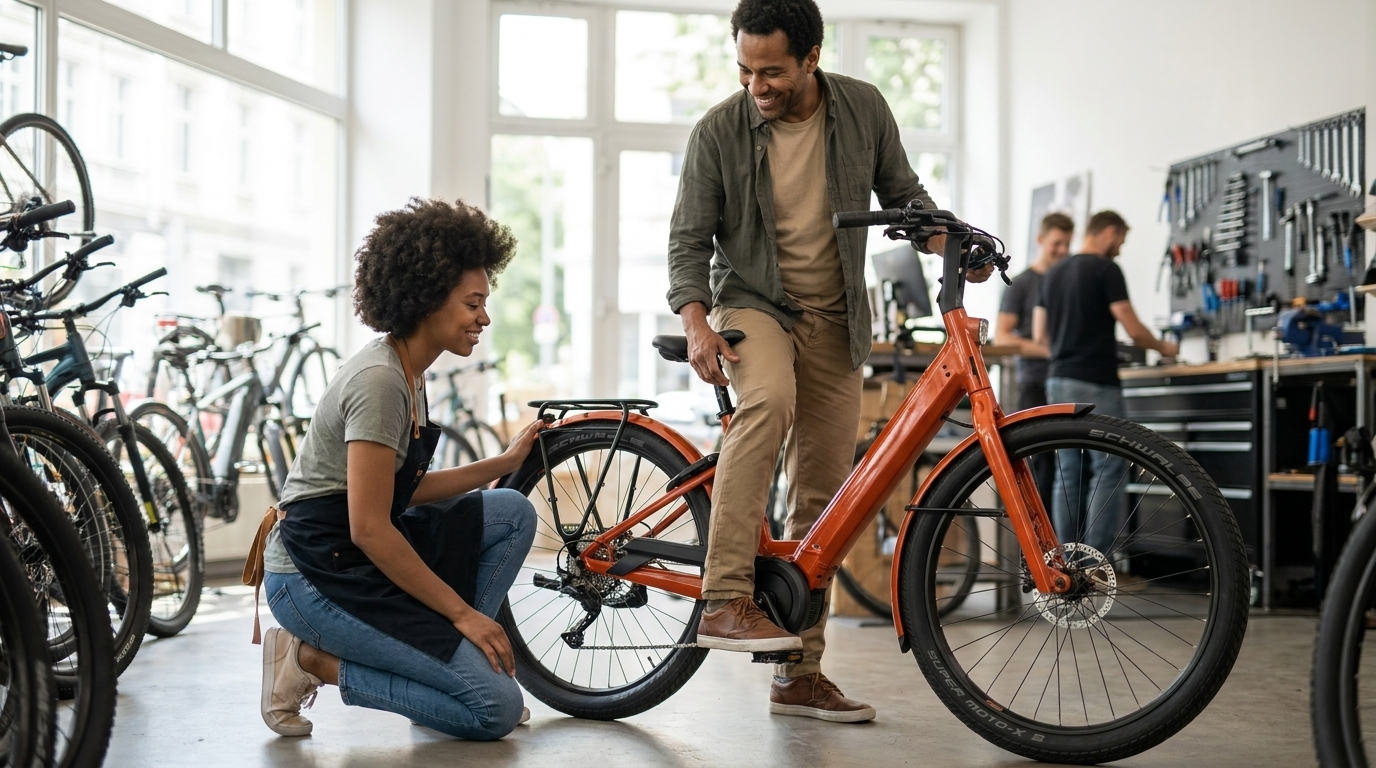
A step-thru city e-bike with the Bosch Smart System, sized for riders 1.57m to 1.90m, built for everyday errands and easy hop-on, hop-off riding.
Which Scooteretti e-bike fits your use case?
If you have worked through the steps above, one of these three usually fits, depending on whether you are optimizing for comfort, budget, or a classic upright ride.
| Bike | Best for | Motor | Price (CAD) |
|---|---|---|---|
| Cube Kathmandu Hybrid Comfort Pro 800 | Daily commuting and comfort, longer range | Bosch Performance CX (mid-drive) | $6,299.00 |
| Moustache Lundi 27.3 | Budget-conscious city and errand riding | Bosch Performance (mid-drive) | $4,699.00 |
| Gazelle Arroyo C5 Elite | Classic upright Dutch-style comfort | Bosch Performance Line Smart System (mid-drive) | $5,499.00 |

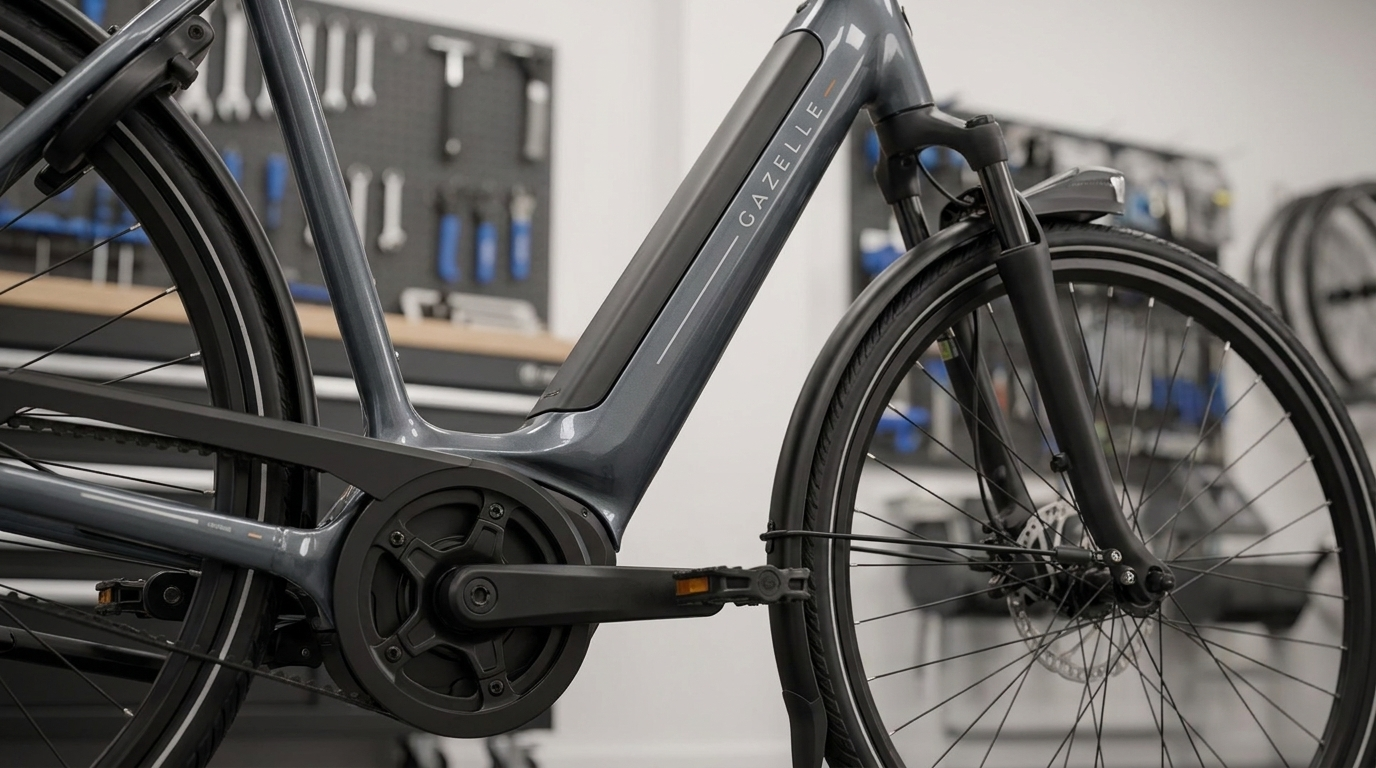
An upright Dutch step-thru with a Bosch Performance Line Smart System mid-drive, a front suspension fork, and a silent Gates belt drive in place of a chain, built for relaxed, low-maintenance riding and one of our most popular models.
Step 6: What should you check before you pay?
Buying the cheapest e-bike you can find is usually a false economy. Budget bikes often cut corners on unbranded electronics, weaker frames, and lower-tier brakes, and brakes matter more on an e-bike than a regular bicycle because you accelerate faster. Before you pay, check three things: what the warranty actually covers (look for at least 2 years on the motor, battery, and frame), whether replacement parts and local service are realistically available, and whether the brand has a track record you can verify rather than a storefront that appeared a few months ago.
A bike that costs more upfront but holds its motor, battery, and brakes for years is almost always the better deal than a cheaper bike you replace, or fight with, within a season.
The numbers make the case clearly. A lower-cost e-bike built around unbranded components typically has a usable life of two to five years before something major, the motor, the battery, or the frame, needs replacing. A higher-quality e-bike, often 20 to 30 percent more upfront, can deliver 15 to 20 years of service because it uses standard, widely available bicycle components that more shops can service and find parts for well into the future. Spending a little more now is a small price for the peace of mind of a bike that is still rideable, and serviceable, decades from now, and it can save you thousands of dollars over the life of the bike compared with replacing a cheaper one every few years.
Frequently asked questions
What's the difference between Class 1, 2, and 3 e-bikes?
Those labels are mostly American terms, though Ontario and BC have started using similar "Class 1" and "Class 2" categories. In general, Class 1 means pedal-assist only (no throttle), Class 2 adds a throttle, and Class 3 allows higher assisted speeds with more restrictions on where you can ride. In Canada, the more universal category is the power-assisted bicycle, defined by motor wattage, top assisted speed, and working pedals, so check your province's terms directly rather than assuming the US classes apply everywhere.
Do I need a licence to ride an e-bike in Canada?
If the bike meets your province's power-assisted bicycle rules (typically 500W or less, assist capped at 32 km/h, working pedals), most provinces do not require a licence, registration, or insurance. A few exceptions exist, including throttle-equipped bikes in some provinces and all e-bikes in Prince Edward Island, so confirm your province's rules before you buy.
How long do e-bike batteries actually last?
Most e-bike batteries have a usable life of three to five years at most before capacity drops off noticeably. A high-quality battery, such as a Bosch system, is built to a higher standard and typically lasts 10 to 12 years. Look for a battery that is UL certified: that means it has passed independent safety testing, which gives you peace of mind that it is safe to charge and store, and it is often required to meet homeowners' insurance conditions for e-bike batteries.
Is a more expensive e-bike actually worth it?
Usually, yes, within reason. The price difference between a budget and a mid-range e-bike typically buys a better-known motor system, a longer warranty, stronger brakes, and parts your local shop can actually get. Above a certain price point, you are often paying more for finish and extra features rather than meaningfully better performance.
Can I ride an e-bike in the rain?
Yes. Quality e-bike motors and batteries are sealed against rain and road spray for normal riding conditions. Avoid fully submerging the bike (for example, in deep flooding) and dry off the electrical contacts if it gets heavily soaked, but a normal rainy commute will not damage a well-made e-bike.
Still not sure which e-bike is right for you?
Book a fitting at Scooteretti and test ride before you decide. We'll help you match the motor, battery, and frame to how you actually ride.
Shop e-bikes →Free shipping on all e-bikes.