









Your knees don’t usually complain on the first flat kilometer of riding. They complain on the second hill, the stop-and-go intersection, or the day your leg is already tired and you still need to get home.
That’s exactly where the right eBike changes the experience. An electric bike can take the “spike” out of pedaling - the high-torque moments that tend to aggravate knee pain - while still letting you ride for fitness, transportation, and sanity. But not every eBike is a good electric bike for bad knees. Some setups quietly encourage grinding in a hard gear. Others put you in a position that makes your knees do too much of the work.
This is a practical, shop-floor way to think about knee-friendly eBikes: what actually reduces strain, what can backfire, and how to choose a configuration you’ll still enjoy a year from now.
Why knees get irritated on bikes

Most knee discomfort on a bicycle comes from repeated high load at a poor joint angle. The classic trigger is “mashing” - pushing hard at low cadence, especially uphill or when accelerating from a stop. On a regular bike, you either push through it or you stop riding.
An eBike gives you another option: keep the pedals turning at a smoother cadence while the motor adds the extra force. Done right, that reduces peak stress on the joint. Done wrong - with the saddle too low, the wrong gearing, or a motor mode that encourages you to push too hard - you can still aggravate your knees, just at higher speeds.
The goal is simple: keep effort consistent, keep cadence comfortable, and keep your position neutral.
What to look for in an electric bike for bad knees
The knee-friendly choice isn’t a single model. It’s a set of decisions that work together: motor behavior, gearing, frame style, and fit.
Prioritize smooth assist, not just “more power”
A common misconception is that the strongest motor is automatically best for sore knees. In reality, you want assist that feels predictable and easy to modulate. Mid-drive systems (like many Bosch-equipped bikes) sense pedal input and add power in a way that encourages spinning rather than stomping.
That matters because a mid-drive motor works through the bike’s gears. When you downshift and keep a higher cadence, the motor also operates in a more efficient range, helping you climb without that knee-jarring surge.
Hub-drive eBikes can also be comfortable - especially on flatter routes - but they don’t benefit from your gearing in the same way. For riders with bad knees who face hills, a quality mid-drive is often the safer bet.
Get gearing that makes “easy spinning” realistic
If you can’t find a low enough gear, you’ll grind. And grinding is where knees tend to complain.
Look for a drivetrain that gives you a genuinely easy climbing gear, not just a marketing-friendly gear count. A wide-range cassette, or a well-matched internal gear hub, can make the difference between spinning up a hill at 70-85 rpm versus muscling through it at 45 rpm.
For many knee-sensitive riders, continuously variable systems like Enviolo are worth considering because they let you fine-tune resistance without hunting for the perfect gear. Traditional derailleur systems can be excellent too - as long as the gear range is wide enough and you’re comfortable shifting.
Choose a riding position that reduces joint stress
A slightly more upright posture usually helps riders with knee issues because it reduces the tendency to push “down and forward” aggressively. That said, too upright can sometimes lead to a low saddle and high bars that shorten your leg extension and load the knee.
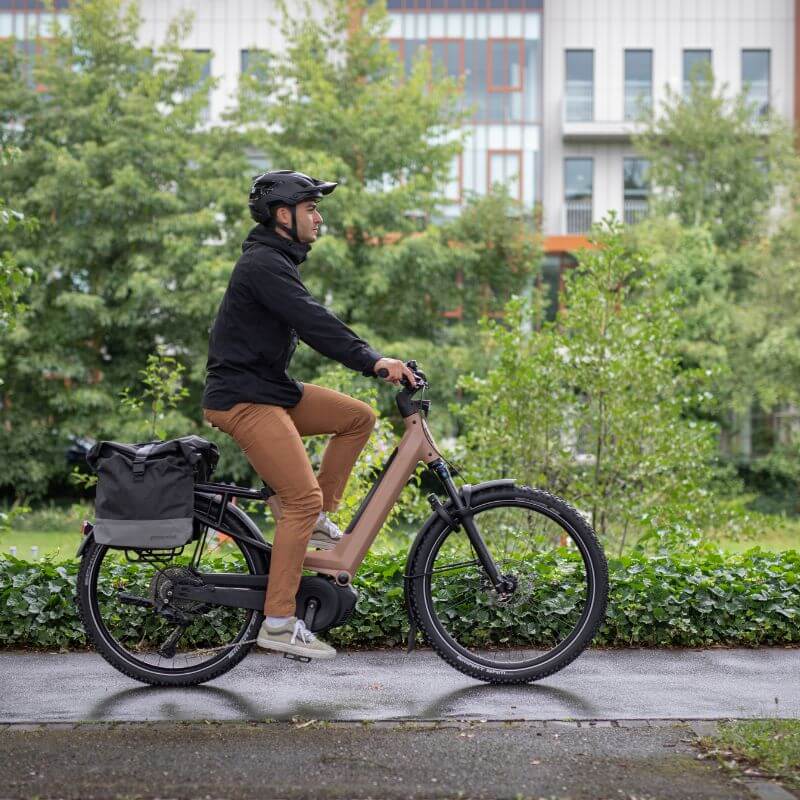
City and touring eBikes tend to strike the sweet spot: stable handling, ergonomic cockpit, and geometry that supports long rides without forcing a sporty bend.
If you’re comparing categories, full-suspension eMTBs can be very forgiving on rough surfaces, but their more aggressive stance and higher saddle-to-bar relationship may require more deliberate fitting. Compact bikes can be great, but the fit window can be narrower for taller riders.
Step-through frames are more than a convenience
For bad knees, step-through frames aren’t just about comfort. They reduce awkward mounting and dismounting - a moment that can twist or load the knee in a way pedaling never does.
If you ride in everyday clothes, stop frequently, or have any range-of-motion limitations, a step-through can be the difference between riding more and riding less.
Brake and tire choices matter more than people expect
Knee pain isn’t only about pedaling. It’s also about how often you’re forced into hard accelerations.
Confident braking and stable tires help you ride smoothly in traffic and on mixed paths, which reduces abrupt start-stop efforts. Hydraulic disc brakes are a strong default on premium eBikes for exactly this reason. Wider tires at appropriate pressure also reduce vibration and fatigue, helping your legs feel better over longer distances.
Fit: the fastest win for knee comfort
If you want the most immediate improvement in knee comfort, don’t just look at bikes with a more powerful motor but rather choose a bike with a proper fit as well.
A saddle that’s too low is a common cause of knee irritation because it increases knee bend at the top of the pedal stroke. Too high can cause rocking hips and overextension. Handlebar reach that’s too long can pull you forward, changing how you load the pedals.
The catch is that “proper” fit isn’t one number. It depends on your flexibility, injury history, preferred cadence, and even the shoes you ride in.
As a general direction (not a medical rule), many knee-sensitive riders do better with a saddle height that supports fuller extension and encourages smooth circles, paired with a cockpit that keeps weight balanced rather than pitched forward.
If you’re already riding and your knees hurt, resist the temptation to lower the saddle to feel “safer.” That often makes the knee angle worse. Instead, aim for stability through the right frame size, a step-through if needed, and confidence in stopping and starting.
Assist strategy: how to ride so your knees stay quiet
Even the perfect eBike can be ridden in a knee-unfriendly way. A few habits make a noticeable difference.
Use more assist earlier than you think you need. If you wait until you’re already pushing hard, you’ve already loaded the joint. It’s usually better to ride in a moderate assist mode and downshift sooner, keeping cadence up and pressure on the pedals down.
Try to avoid “standing and stomping” on climbs. Staying seated with a lighter gear is often kinder to knees. And if your system has an eMTB-style adaptive mode like that on the Bosch Performance CX mid drive motors, test whether it helps you stay consistent or tempts you to push harder.
Also pay attention to starts. Accelerating from a dead stop in a high gear is one of the quickest ways to irritate a knee. Downshift before you stop when possible, and start in an easy gear with higher assist.
Category recommendations that tend to work well
Rather than naming one magic model, it’s more useful to match the bike category to your real riding.
A city or commuter eBike is a strong default for knee comfort: upright geometry, practical tires, stable handling, and gearing meant for repeated starts and moderate hills. If you’re running errands, commuting, or riding rail trails, this is often the most forgiving setup.
A touring or trekking eBike is ideal if your goal is longer rides at a steady pace. These bikes typically prioritize comfort contact points and all-day stability, and they often come with gear ranges that support spinning rather than grinding.
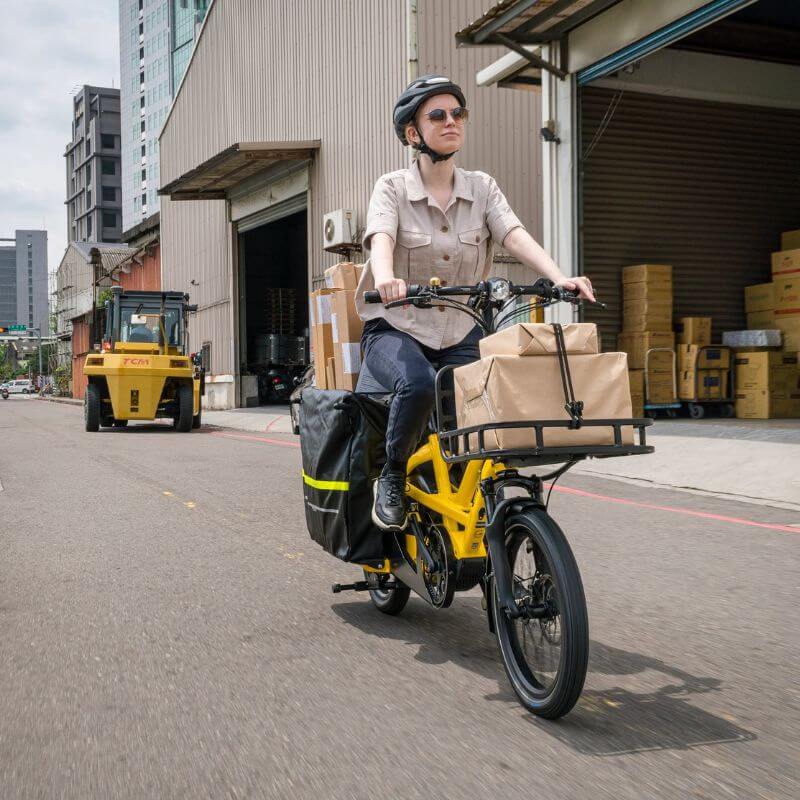
Cargo eBikes can be surprisingly knee-friendly because they’re built to move weight without drama, but only if the motor and gearing are designed for it. If you plan to carry kids or heavy loads, don’t compromise on drivetrain quality - under-geared cargo bikes are where knees get punished.
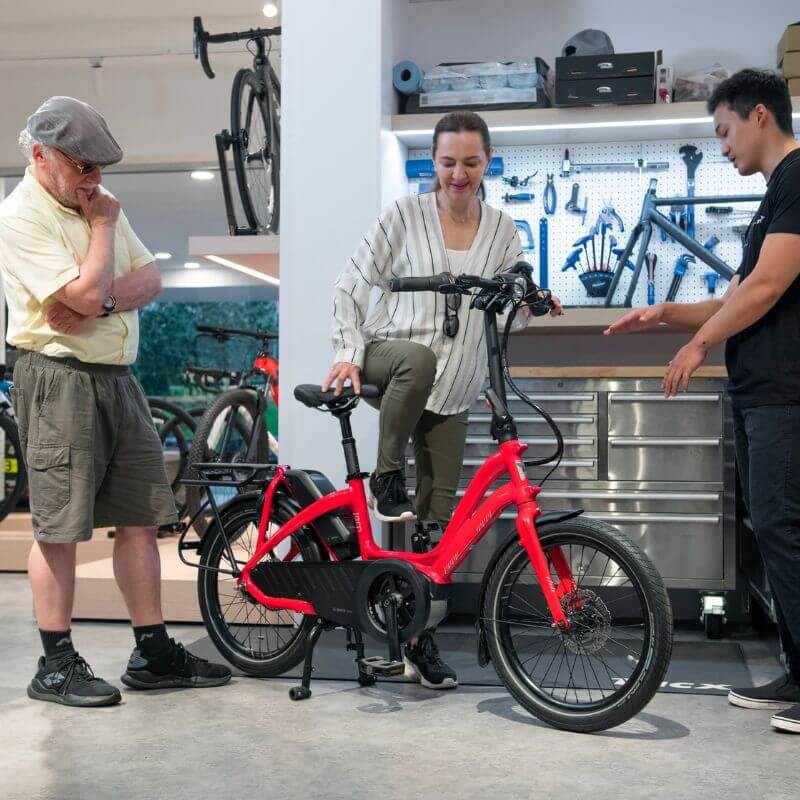
Folding and compact eBikes can work well for bad knees if you get the fit right. The advantage is easy mounting and storage. The trade-off is that some compact frames have fewer fit adjustment options, so it’s worth being picky.
The trade-offs: what to avoid (or at least test carefully)

A very sporty, forward-leaning eBike can be efficient and fun, but it may encourage higher pedal forces if the gearing is tall or if you ride it like a road bike. If your knees are sensitive, you’ll want to confirm it has a truly easy low gear and that the cockpit can be adjusted to reduce reach.
Single-speed or limited-range drivetrains are another yellow flag. Even with a powerful motor, you still need gearing that supports a comfortable cadence across your route.
Finally, don’t ignore bike weight. Heavier eBikes aren’t automatically bad for knees - the motor helps - but if the bike is difficult to maneuver at low speed or to position when starting, you may end up making awkward knee-loaded moves. Stability helps; clumsiness hurts.
Support after the sale matters for knee comfort
Knee comfort is not a one-time decision. It evolves as your fitness changes, as you adjust your riding habits, and as components wear in.
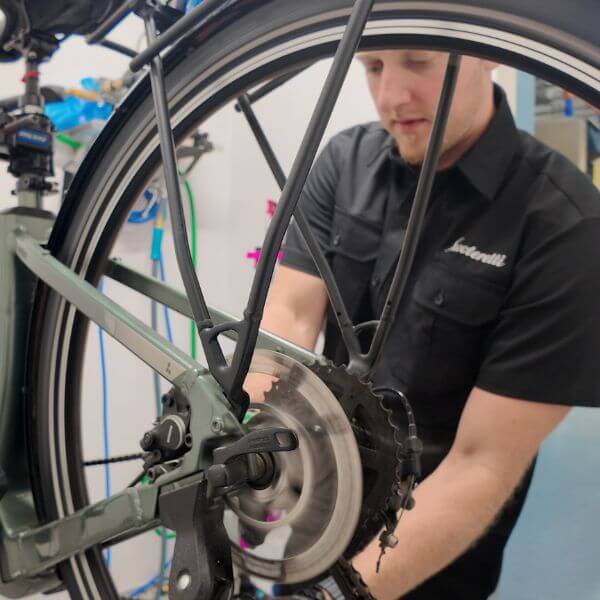
A good shop will help you dial in saddle height, swap a stem if reach is off, recommend a seatpost that improves comfort, or fine-tune shifting so you can reliably choose easy gears under load. They’ll also keep your drivetrain and brakes in top shape, because a bike that shifts poorly tends to force harder pedaling.
If you want that kind of long-term ownership support, Scooteretti is set up for it - premium eBikes, brand-specialist guidance, and certified service in one place. You can explore options or book a consult at https://scooteretti.com.
A simple way to choose with confidence
When you test ride, don’t focus on speed. Focus on your knees.
Find a gentle incline, shift to an easy gear, and try to keep your cadence smooth. Does the motor help you stay light on the pedals, or does it feel like it wants you to push harder? Try starting and stopping a few times. Notice whether mounting feels effortless or awkward. Pay attention to whether you can naturally stay seated and spin.
The best electric bike for bad knees is the one that lets you ride with quiet joints and consistent effort - the kind of ride where you get home thinking about the route, not your knees.

About the Author
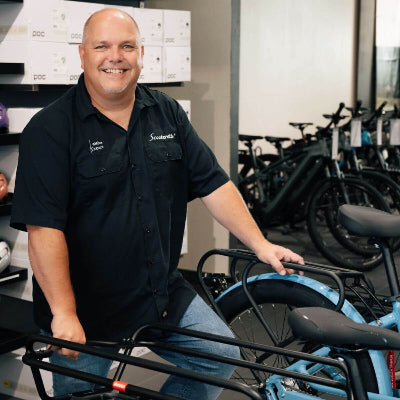
William Leishman
Founder & President, Scooteretti
William Leishman is the Founder and President of Scooteretti, one of Canada's leading electric bicycle retailers and a recognized authority in the eBike industry since 2010. As a member of the National Bicycle Dealers Association (NBDA) Advisory Board for eBike Safety, William plays a central role in shaping best practices and safety standards across North America, and is regularly featured on television, radio, print, and digital media as a trusted voice for consumers and industry professionals alike.
William's core mission is to educate Canadian consumers on choosing the right electric bicycle — one that truly fits their lifestyle, budget, and safety needs. As Canada's eBike market has exploded with new options, too many riders are purchasing the wrong bike, spending thousands across multiple purchases before finding a good fit. Scooteretti's "buy it once, buy it right" philosophy was built to solve exactly this problem, and it has helped thousands of satisfied customers make confident, informed decisions since 2010.
Beyond finding the perfect ride, William is on a personal mission to make eBike safety a national priority. He is a passionate advocate for making UL certification mandatory for every electric bicycle sold in Canada — a standard he believes every Canadian deserves, yet one that current legislation does not require. William is actively working to raise awareness among consumers and at all levels of government, because he firmly believes that no Canadian should have to risk their safety on an uncertified eBike. This isn't just a business position — it's a personal commitment he is dedicated to seeing become law.