















A rider can love the motor, battery range, price and features of an eBike, then regret the purchase within a week because the fit is off. If you are wondering how to size an electric bike, the answer is not just about height charts. On an electric bike, frame geometry, riding position, motor support, and intended use all affect what the right size actually feels like on the road.
That matters more than many people expect. A poorly sized eBike is harder to control at low speed, less comfortable over longer rides, and more tiring when starting, stopping, or maneuvering in traffic. On heavier bikes like cargo eBikes, step-through models, and full-power commuter bikes, proper sizing is also a safety issue.
How to size an electric bike starts with riding style
The first question is not your inseam. It is how you plan to ride.
A commuter eBike, a relaxed city bike, a long-distance touring model, and an electric mountain bike can all fit very differently even when the frame size label looks similar. A medium in one brand may feel compact and upright, while a medium in another may stretch you out more aggressively. Premium European brands often size around intended posture as much as raw body measurements.
If your goal is daily commuting, most riders are better served by a more upright position that reduces strain on the neck, shoulders, and wrists. If you plan longer recreational rides or higher-speed road sections, a slightly longer reach may feel more stable and efficient. For technical trail riding, standover clearance and handling become more important than simply matching a chart.
That is why sizing should always be tied to use case first. The right electric bike size for a school-run cargo bike is not judged the same way as the right size for a gravel eBike.
Start with the manufacturer size chart, then verify it

A quality size chart is your first filter, not your final answer. Most premium brands size bikes using rider height ranges, and some also include inseam guidance. That gets you into the right window, but it does not guarantee the ideal fit.
Two riders who are both 5 foot 10 may need different sizes depending on leg length, torso length, arm length, flexibility, and comfort preferences. One may prefer a larger frame for stability and pedaling room. The other may feel better on the smaller size because it is easier to mount, stop, and maneuver.
Electric bikes add another layer. Because the motor assists your pedaling, some riders can comfortably choose a more upright and slightly shorter fit than they would on a non-electric bike. They are not trying to maximize pedaling efficiency at all costs. They want control, visibility, and day-to-day comfort.
If you are between sizes, there usually is not a universal right answer. The smaller frame generally feels easier to manage and often suits urban riding well. The larger frame can feel more planted at speed and may better suit riders doing longer distances. The trade-off depends on the bike category and your priorities.
Key body measurements that matter
Height is the most common starting point, but inseam is often the measurement that prevents mistakes. Inseam helps determine whether you have enough leg extension for efficient pedaling and enough clearance when stopping.
Torso and arm length matter for reach. If you have a shorter torso, a bike that technically matches your height may still feel too long. If you have long arms and legs, you may feel cramped on the smaller option.
Flexibility matters too. Riders returning to cycling, older riders, and anyone prioritizing comfort usually benefit from a less stretched position. That is especially true on commuter and comfort-oriented electric bikes.
Frame size is only part of the picture

A common sizing mistake is focusing only on the number printed on the frame. That number does not tell the whole story.
Top tube length, reach, stack, head tube height, wheelbase, and standover all shape how a bike fits. On step-through electric bikes, traditional frame-size thinking can be even less useful because the design prioritizes accessibility and upright comfort. These bikes may offer broad fit adjustability through cockpit setup rather than many frame sizes.
Seatpost extension and saddle adjustment also affect fit, but only within reason. If you need to raise the seat unusually high or slide it too far forward or back to make the bike work, the frame is probably not the right size.
Handlebar shape and stem setup can fine-tune comfort, yet they should not be used to compensate for a fundamentally wrong frame. A professional fit adjustment can improve a good match. It cannot fully rescue a poor one.
How an electric bike should feel when it fits
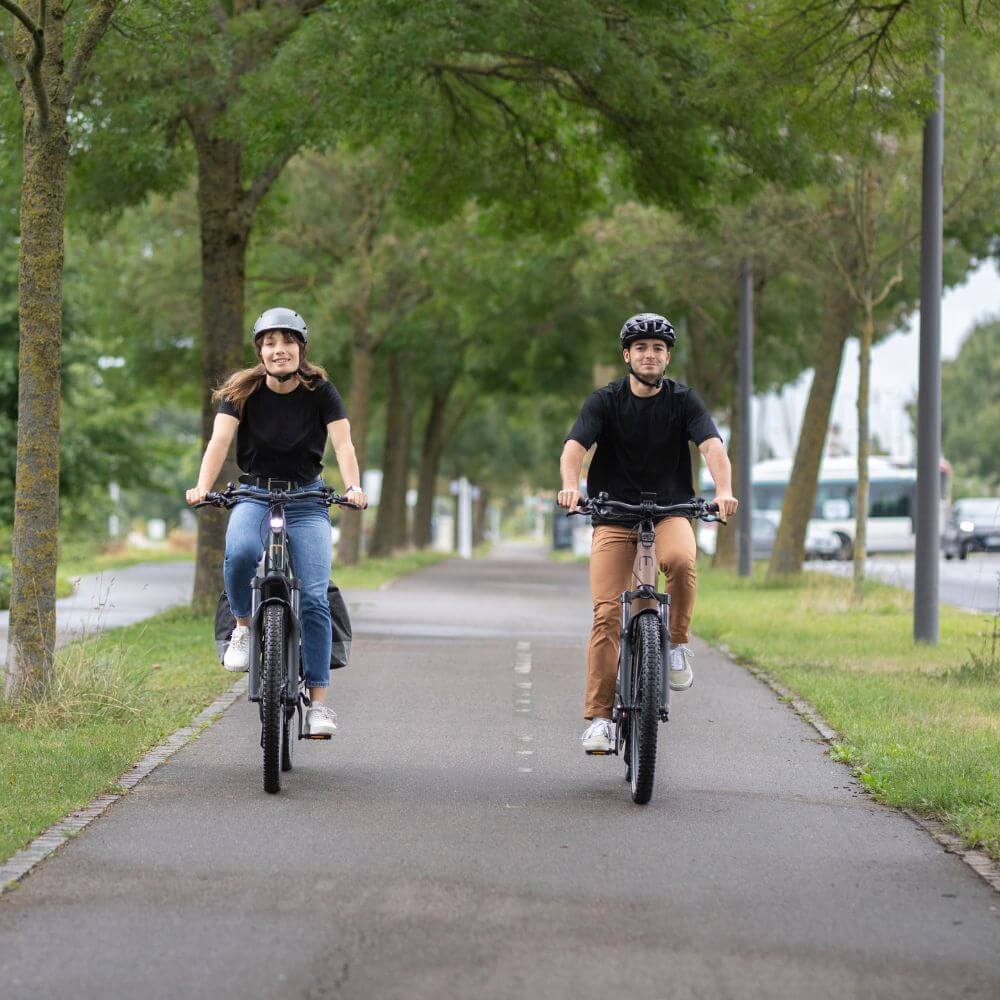
When the size is right, you should feel balanced rather than perched or stretched. You should be able to place a foot down confidently at stops, especially in city riding where frequent stopping is normal. The bike should track predictably without feeling twitchy or difficult to steer at low speed.
Your saddle height should allow a slight bend in the knee at the bottom of the pedal stroke. You should not rock your hips to reach the pedals, and your knees should not feel sharply bent throughout the stroke. Your hands should rest on the bars without excessive pressure through the wrists or shoulders.
On an eBike, fit at low speed matters more than many riders realize. Motor assistance helps the bike get moving, but the bike is often heavier than a standard bicycle. If the frame is too tall, too long, or awkward for your body proportions, starts and stops can feel less controlled.
Signs the bike is too big
A bike may be too large if you struggle to clear the frame comfortably, feel overextended to the bars, or have trouble making tight low-speed turns. Riders on oversized frames often lock their elbows, shift forward on the saddle, or avoid stopping cleanly because the bike feels cumbersome.
This can become more noticeable with loaded cargo bikes or when riding in urban conditions. A bike that feels stable on a straight path may still be the wrong size if it feels intimidating in parking lots, intersections, or stop-and-go traffic.
Signs the bike is too small
A bike may be too small if your knees feel cramped, the cockpit feels compressed, or the handling feels nervous at speed. Some riders choose a smaller bike for accessibility, which can be the right decision, but there is a limit. If the fit forces an awkward pedaling position or leaves you feeling bunched up on longer rides, sizing up may be the better move.
Sizing by eBike category
Commuter and city eBikes usually favor comfort, visibility, and easy mounting. Many riders do well on a size that supports an upright posture rather than a sporty one. Step-through models are often ideal for riders who value confidence at stops or ride in everyday clothing.
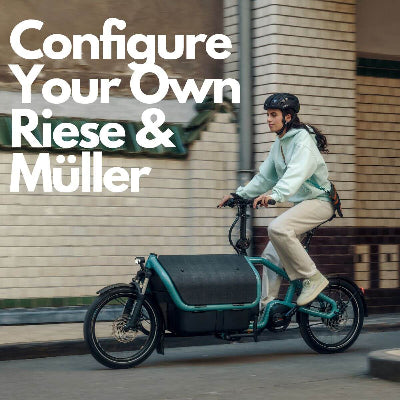
Cargo eBikes are different. Many premium cargo bikes come in one-size or limited-size platforms, or have a lot of adjustability within their design (stems, saddles, etc..) with fit achieved through saddle and cockpit adjustments. Here, the focus is less about classic frame sizing and more about whether the bike accommodates your leg extension, reach, and daily handling needs. Because these bikes are heavier and often carry children or goods, confident control matters more than chasing a performance-oriented fit.
Electric mountain bikes and gravel eBikes tend to be more geometry-sensitive. Riders may choose between sizes based on terrain, handling preference, and experience level. The smaller option may feel more agile, while the larger one may offer more stability on rough or faster terrain.
Folding and compact eBikes also break the usual rules. Their adjustability can suit a wider range of riders, but comfort still depends on proper saddle height and bar position.
The value of a test ride and expert fit advice

No chart can replace a proper test ride or speaking with a expert ebike fitter / retailer. Even a short ride tells you more than measurements alone. You can feel how easily the bike starts, how naturally it steers, whether your posture feels relaxed, and how confident you are when stopping.
That is especially useful when comparing premium models from different brands. Each one may interpret sizing a little differently. A rider shopping for a Bosch-powered commuter eBike, for example, may find that two bikes in the same labeled size produce very different riding positions.
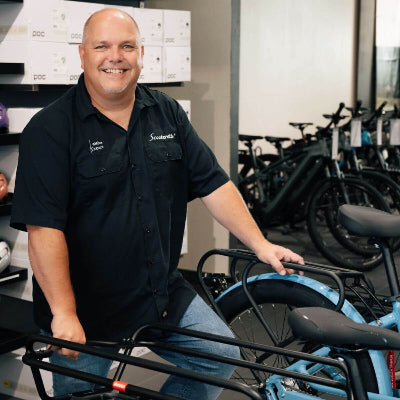
This is where experienced guidance matters. At Scooteretti, sizing conversations often go beyond height and inseam to include injury history, flexibility, route type, carrying needs, and whether the rider wants comfort, efficiency, or easier access. That is usually how the best long-term fit decisions are made.
A few practical tips before you buy
Wear the shoes you normally ride in when checking saddle height. If possible, test the bike in conditions similar to your real use, especially if you expect frequent stops or loaded riding. Do not assume a bigger bike is more advanced or a smaller one is easier by default. Better fit is better fit.
And if you are buying online, work with an electric bike expert who can assist you with a perfect and always provide accurate measurements and be honest about your riding goals. A free ebike consultation with our experts will narrow the options significantly, but only if the information is real.
The best-sized electric bike is the one that feels natural from the first pedal stroke and still feels right after months of everyday use.

About the Author
William Leishman
Founder & President, Scooteretti
William Leishman is the Founder and President of Scooteretti, one of Canada's leading electric bicycle retailers and a recognized authority in the eBike industry since 2010. As a member of the National Bicycle Dealers Association (NBDA) Advisory Board for eBike Safety, William plays a central role in shaping best practices and safety standards across North America, and is regularly featured on television, radio, print, and digital media as a trusted voice for consumers and industry professionals alike.
William's core mission is to educate Canadian consumers on choosing the right electric bicycle — one that truly fits their lifestyle, budget, and safety needs. As Canada's eBike market has exploded with new options, too many riders are purchasing the wrong bike, spending thousands across multiple purchases before finding a good fit. Scooteretti's "buy it once, buy it right" philosophy was built to solve exactly this problem, and it has helped thousands of satisfied customers make confident, informed decisions since 2010.
Beyond finding the perfect ride, William is on a personal mission to make eBike safety a national priority. He is a passionate advocate for making UL certification mandatory for every electric bicycle sold in Canada — a standard he believes every Canadian deserves, yet one that current legislation does not require. William is actively working to raise awareness among consumers and at all levels of government, because he firmly believes that no Canadian should have to risk their safety on an uncertified eBike. This isn't just a business position — it's a personal commitment he is dedicated to seeing become law.